Sunday, May 8, 2011

Be@rbrick

http://www.bearbrick.com/index.html

Be@rbrick is a Japanese brand of collectible figures designed and produced by MediCom Toy Incorporated. The name is derived from the fact that the figure is a cartoon-style representation of a bear, and that it is a variation of MediCom's Kubrick design. The @ in the place of the letter 'a' is a trademark of MediCom Toy is a part of the Be@rbrick brand. The first figure was released 27 May 2001 as a free gift to visitors of the World Character Convention 12 in Tokyo. Since then Bearbricks have been released in several different sizes using a variety of materials, including wood, felt, and glow-in-the-dark plastic.


Here are some of the newest models of 2011:
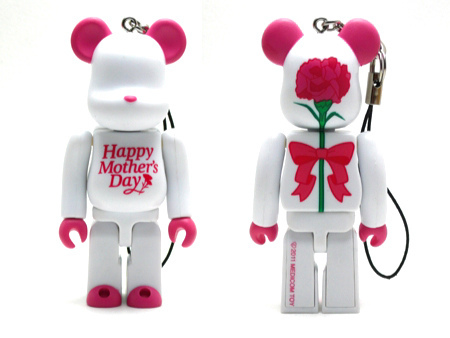
Mother's Day Edition

Valentine's Day Edition


2011 Birthday Be@rbricks


Be@rbrick is most popular in Asia, such as China, Hong Kong, Taiwan and Japan.
Bearbricks differ from their predecessor Kubricks, in that each series includes 18 figures in 10 different themes:


  • Basic, a solid-color figure with a letter in a second color on its chest; when all nine figures are placed in a row, they spell the word Bearbrick.
  • Jellybean, a solid-color figure molded in translucent plastic.
  • Pattern, a figure with a patterned deco that may range from polka dots to patterns designed by artist and designer Charles Eames.
  • Flag, a figure painted as a nation's flag.
  • Horror, a figure with a theme based upon a well-known horror film, or other source in the horror genre.
  • SF (science fiction), a figure with a theme based upon a science fiction source, often a film.
  • Cute, a figure which visually represents the concept of cuteness.
  • Animal, a figure which depicts an actual animal.
  • Artist: two figures, each designed by a visual artist.

Like most people who collect figures, even though some collectibles like Be@rbrick are expensive, people still buy these figures because

Monday, April 25, 2011

Bent Objects by Terry Border

Terry Border is an arteest which is an artist who doesn't take anybody or anything seriously, not even themselves and uses humor in their art.


"Basically, I get ideas for photographs when everyday objects remind me of something else. Then I try to think about how I can show others the connection I made. The next step - I try really hard to take it one step further - add humor, emotion of some kind, maybe an 'aha' moment. For example, with Mail Order Bride, I came up with the characters, but the little chair against the door really makes that shot for most people.

"Then again, sometimes an idea just pops into my head. That makes me happy."


Border uses everyday objects and makes them come alive, he finds their secret lives and displays them for the world to see. He uses wires to create the limbs of objects for them to be more human-like and then puts them in a hilarious situation.


I think the objects Border uses and the situation he places them in is very thoughtful. The object and the situation it is in is also related to society and represents different type of people. For example,


Link to Terry Border's blog: http://bentobjects.blogspot.com/

Saturday, April 23, 2011

Kei - Vesperbell


This song Vesper bell (which means evening bell), is sung by a Japanese artist Kei. Kei is the ex-guitarist of the two visual kei Japanese rock bands called Kannivalism and Baroque. 

This music video is very entertaining and gives a nostalgic feeling. In the music video, there are references to Alice in Wonderland where there is a rabbit that jumps into a mirror, and playing cards playing trumpets. The illustrations and pop up effects are also suited for children as if it was from a storybook. Even the scenery and backgrounds look very fairy tale like.

I like this music video because it is very different from visual kei and any type of rock. This video gives off a happy and safe feel, the same you felt as a child, the opposite of rock, which is rebellious and dangerous. 

Visual Kei

Visual Kei is a fashion trend amongst many Japanese musicians (usually rockers). This style is distinguished by the make-up, exaggerated hairstyles and flamboyant costumes. Some people say that Visual Kei refers to a music genre, or a sub-genre of Japanese rock (J-rock) related to glam-rock, punk rock, Gothic rock and metal. But the participation in the sub-culture of Visual Kei fashion is just as important as the music.

This Visual Kei style started in the late 1980's with bands such as X Japan and Color. The term Visual Kei was created with one of X Japan's slogans "Psychedelic violence crime of visual shock".

Visual Kei has enjoyed popularity among artists achieving mainstream success, with influences from Western phenomena, such as glam, goth and cyberpunk. The popularity and awareness of such groups outside of Japan has seen an increase in recent years.


Some examples of Visual Kei bands are:
Malice Mizer

Ayabie

 AnCafe

There are many influences from different time periods in visual kei. My favourite amongst the visual kei j-rock bands is Versailles, who are easily recognized by their Victorian/rococo-esque costumes and theme. The band members look flawless and beautiful as a result to their makeup and goes well with their beautiful clothing. They have a 'princely' and 'princessy' feel to them (the guitarist Hizaki and deceased guitarist Jasmine You cross dressed as girls). Not only do I think that there image as a band is attractive, but their music also is very attractive. I also find it funny when in the music videos with a Victorian house and setting, you see an rich, elegant and beautiful looking girl and boy sitting in chairs playing electric guitars/bass.


Lolita Fashion

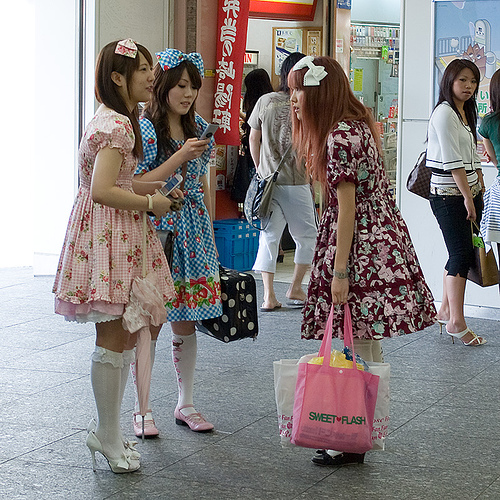
Lolita is a Japanese street fashion inspired by the clothing and general aesthetics of the Rococo and Victorian periods.This fashion movement started in Japan (Harajuku specifically) in the 1980's and has evolved greatly since.


The term "Lolita" may be unfavorable to those who first hear about the fashion especially in Western countries because of the meaning it holds from Vladimir Nabokov's novel, "Lolita", which changed the meaning of the name for most people. It is generally assumed that the name of the fashion comes from a distortion of the meaning while word-borrowing from the English language. In the case of the Japanese fashion, the term "Lolita" refers to the childish nature of majority of the clothes. Lolita Fashion is about look cute or elegant, but it depends on the different styles of lolita fashion. 


A lolita outfit consists of a head wear, blouse, bell-shaped skirt, undergarment, leggings, and footwear. Although there are a variety of different lolita styles, each of these pieces of clothing are essential to creating the lolita outfit. 
There are also many different types of lolitas such as: Gothic Lolita, Sweet Lolita, Casual Lolita, Classic Lolita, Punk Lolita and many more. 


In addition to being a fashion, some people enjoy living a "Lolita Lifestyle" in which one sees Lolita as more of a philosophy of living beautifully rather than just dressing it. People who is living a Lolita Lifestyle may try and live like a princess, surrounding themselves with things of beauty, and taking part in a number of feminine activities such as baking, embroidery, sewing, etc. 


I personally like the punk lolita style the best because it is the combination of two of my favourite styles. It is the combination of Japanese lolita and Eastern punk style and that may be a bit more difficult to pull off than the other lolita styles. Accessories and fabric choice are very important to this style, for example partially ripped fabrics, plaid or checkered pattern fabrics, and fishnets are a good choice, as are chains and studs. Also layering is key to this style! Makeup also contributes to the overall punk lolita look, putting on heavier makeup will definitely give you the aesthetics for Punk style more than with the Sweet or Classic styles.


Wednesday, April 20, 2011

Making Your Phone Extra Cute!

Decoden is a popular trend in Japan where it all started with high school girls decorating their cell phones. Deco den stands for 'decoration denwa', 'denwa' meaning 'phone' in Japanese. People use rhinestones, lace/fabric, pearls, whipped cream and other cute deco pieces to decorate their phones, mirrors, pencil cases and other items to make their ordinary item look super cute.


Not only phones, but deco den is used for nails to create nail art too.


Decoden is really popular with Japanese girls because majority of them love cute things and want to be cute. I also think that decoden is very cute when it is decorated in a way I like, since there is no set design for decoden; it is all customized to the consumer's liking. I find this very unique and your phone can definitely be recognized right away amongst the others!  

Sunday, April 17, 2011

Stop the Violence

Francois Robert was at an auction in rural Michigan. It was the mid 1990s. A school was selling off supplies, and Robert was looking to buy some furniture for his studio. "I was interested in buying some lockers, and they had three for $50." Two of the lockers were empty, but not the third. When Robert opened it up, he found a human skeleton.


This increadible bone art by Francois Robert portrays the different iconic representation of weapons and religion.  Robert’s collection of bone art, titled “Stop the Violence”, uses human bones to recreate guns, grenades, knives and tanks as well as the symbols of the major Western religions.


The human bones is a strong visual representation of what remains after death. Robert uses the human skeletons to form various weapons to tell us a message through his art. That message is to stop the violence, and demonstrates what is left over when conflicts escalate


Robert disassembles the human skeleton and recreates it into the form of something dangerous. He uses ribs, hands, shoulder blades and vertebrae are aligned to create visuals that are unmistakably familiar. Francois Robert’s art is beautiful yet horrifying.